11 Worst Features of Windows 11 and How to Fix Them – Tom's Hardware
Tom’s Hardware is supported by its audience. When you purchase through links on our site, we may earn an affiliate commission. Here’s why you can trust us.
By published
Some problems are easier to fix than others.
Windows 11 is a mixed bag. On the one hand, many people would be happier sticking with Windows 10. On the other hand, there are some solid reasons to upgrade to Windows 11 right now, including better window snapping options, more control over virtual desktops and fresh design flourishes such as rounded corners on windows.
If you choose to move to Windows 11, whether via upgrade or clean install, you’ll notice several significant annoyances, including a context menu that makes you click an extra time, a hobbled taskbar and a default browser menu that makes it more difficult to switch away from Edge.
These are the worst features of Windows 11 and how to fix or, at least, mitigate them.
In Windows 10, when you right-click a file, you’ll see just about every possible program you can open it with, along with a slew of other options that depend on what apps you have installed. In Windows 11, you see a maximum of five choices for files and not necessarily the most useful choices. If you want to see all the choices, you have to click “Show more options” or hit Shift + F10.
For example, when I right-clicked on a .txt file, I was not shown the option to open it with Notepad++, my favorite text editor. I only saw Notepad++, along with several other key choices such as “Scan with Microsoft defender” after I clicked for more options. Thanks for the extra click, Microsoft.
Apparently, Microsoft thinks that, after years of having all your choices in front of you, your tiny brain cannot handle the data stream anymore, lest your head explode like the guy at the beginning of Scanners. Or perhaps Microsoft has been watching too much Marie Kondo and decided, on your behalf, that having full functionality does not spark joy.
Whatever Microsoft’s lame reason, you can get the all your options back, using a simple registry tweak.
Fix: How to get full context menus in Windows 11 
The good news is that, at least for now, you can get the Windows 10 File Explorer in Windows 11 by changing a registry value. If you use the StartAllBack app, a Start Menu replacement which costs $4.99, you can also select this as an option.
Fix: How to get the Ribbon Back in Windows 11 File Explorer
I compared the size of the Start Menu on a 1920 x 1080 display on both operating systems. Excluding the height of the taskbar, which is about the same, the Windows 11 Start menu measured 645 x 740 and housed 18 pinned apps and four “recommended” shortcuts, a total of 22 icons (with room for 2 more, a total of 24). The Windows 10 Start menu measured 648 x 639 and held 30 icons. Better still, in Windows 10, you can scroll down an alphabetical list of all your apps right away, but in Windows 11, you have to hit the “All Apps” button to get there.
Fix: Fortunately, there are three good Start menu alternatives. See our article on
how to replace the Start menu in Windows 11. 
One simple option that Windows 11 takes away is the ability to resize your taskbar. But there is a registry tweak that lets you choose among small, medium or large sizes. That’s not very flexible, but it’s something. Also, if you’re using StartAllBack or Start11, both $4.99 Start Menu replacements, you can use those to accomplish this task.
Fix: How to Change the Taskbar Size in Windows 11
Windows 11 does not provide any officially-supported way to move the taskbar. However, there’s a registry hack that, as of this writing, will allow you to position your taskbar at the top of the screen, with a few caveats. Most notably, while the taskbar will sit on the top of the screen if you perform this tweak, notifications, the calendar and volume menu will still be in the lower-right corner. The Start menu will be on top but align to the left side of the screen.
Also, if you use the Start11 Start menu replacement, there’s an option that allows you to align your taskbar to the top and, unlike the registry hack method, it aligns the menus with the taskbar.
Fix: If you still want the taskbar on top, even with those caveats, see our article on how to move the Windows 11 taskbar to the top.
I prefer having the taskbar icons uncombined, because it allows me to get a better sense of what I have open and an easier way to click through to it. Fortunately, there is a way around this Windows 11 problem.
Fix: In StartAllBack, a Start menu replacement app, you can set the taskbar to uncombine by selecting None on the Taskbar tab. 

Even worse, Microsoft insists you have TPM 2.0 encryption, a feature that many older motherboards don’t have. The reason for these requirements is not performance, but enhanced security. However, if Windows 10 can run fine without TPM there’s no reason why TPM can’t be optional in Windows 11.
In fact, you can get around Windows 11’s TPM, CPU and RAM requirements by using one of a couple of simple methods.
Fix: See our article on how to bypass Windows 11’s TPM requirement. The same steps will bypass the other requirements as well.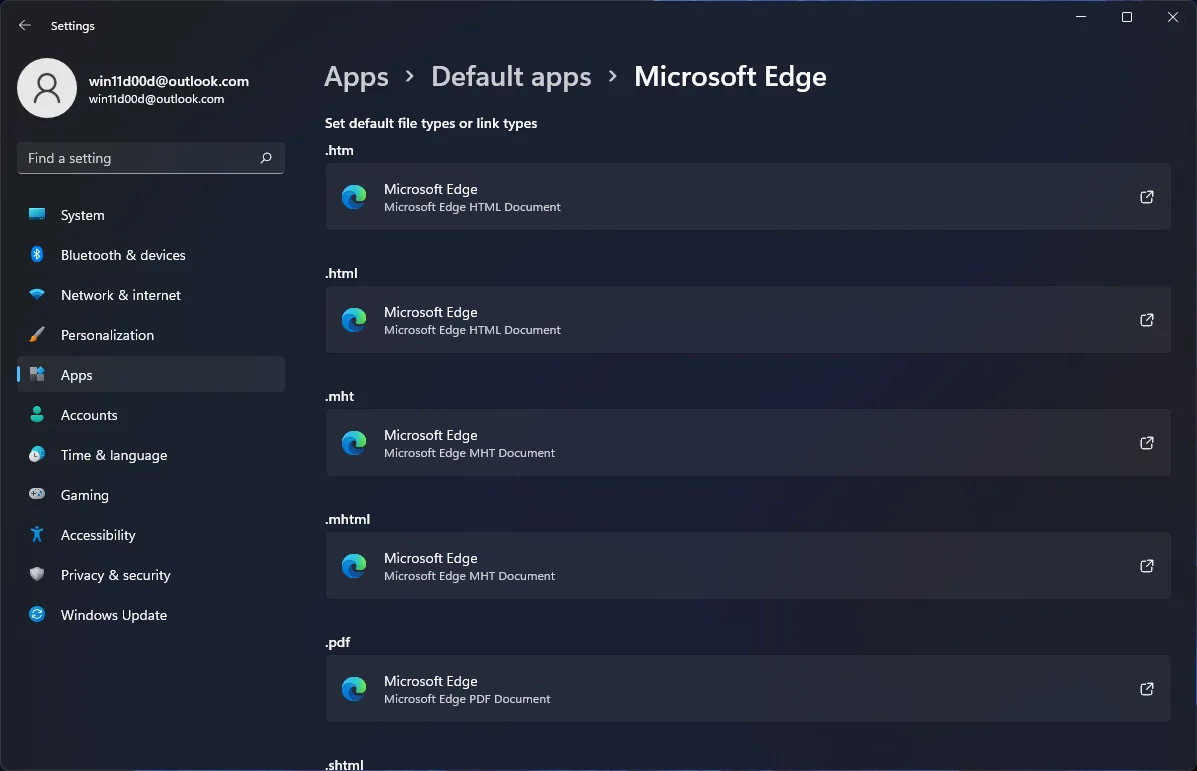
On Windows 10, when you switched to an alternative browser, you were able to set it as the default as part of the installation. In Windows 11, it’s not quite so simple. Not only can Chrome not do this on its own, at least at present, but there are several different settings to change. If you want Windows 11 to use Chrome instead of Edge for all things you might want a browser for, you’ll have to manually change the assignment for .htm, .html, .pdf, .shtml and several other file types.
Even after you make the changes in settings, clicking a link from Windows search or the widget panel will open in Edge. Fortunately, there are workarounds.
Fix: How to Change the Default Browser in Windows 11
Unfortunately, Windows 11 does away with the built-in weather widget, instead making you click on its lame widget panel before you can see the conditions and forecasts.
Fix: Install Weather Bar (preferred) or Weather Bug, which are both free widgets that live in your system tray and show the temperature. You do have to click them to get the forecast and cloudiness, however. Be sure to go into Taskbar settings and set the weather icon to always be on in the “taskbar overflow” menu.

Unfortunately, if you prefer Dropbox, Google Drive or just not storing files in the cloud, you have a piece of software running and eating up CPU cycles, RAM and network bandwidth all the time for no functional reason.
Fix: Right click on the OneDrive icon (it looks like a cloud) and select settings. Then uncheck “Start OneDrive automatically…”

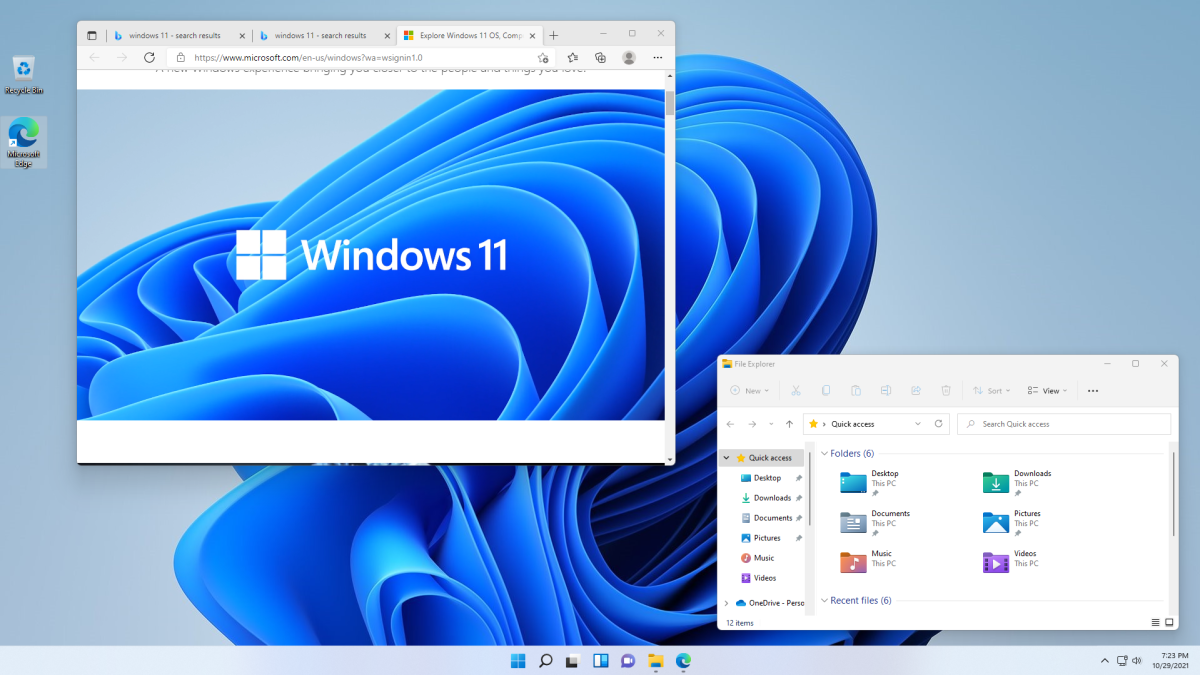
While not quite as repulsive as the weak-sauce wallpapers in Windows 8, the default background you get in Windows 11 screams “beta product.” It looks like someone took a wad of blue crepe paper or the output from a frosting gun applied some filters to it. Among the other preloaded wallpaper options, not one of them showcases the Windows logo or branding, things which would indicate a strong visual identity for the OS rather than just a placeholder.
Fix: There are a lot of choices here, but I recommend going back to basics with a variation on the Windows 10 wallpaper (or the 10 wallpaper itself). Wallpaper Cave has a nice collection of free wallpapers to choose from.
Get instant access to breaking news, in-depth reviews and helpful tips.
Thank you for signing up to Tom’s Hardware. You will receive a verification email shortly.
There was a problem. Please refresh the page and try again.
Tom’s Hardware is part of Future US Inc, an international media group and leading digital publisher. Visit our corporate site (opens in new tab).
© Future US, Inc. Full 7th Floor, 130 West 42nd Street, New York, NY 10036.