How to Check Battery Health and Capacity on Windows 11 – TechPP
Home > Tiny Tip
Lithium-ion batteries are one of humanity’s greatest inventions. They have already helped us develop portable electronic devices and electric vehicles and are on the verge of conquering the grid energy storage market.
But like all good things, lithium-ion batteries have their downsides. Lithium-ion batteries lose their charge capacity when they are repeatedly recharged. Apart from losing their charge, a weakened battery will also lead to poor power output or dangerous situations such as bloated/swollen batteries, especially when used in a device such as your smartphone or laptop, both of which generate heat and lack proper battery cooling solutions normally found in EV battery packs.
That’s why we have created this detailed guide explaining how to check the condition and capacity of your Windows 11 laptop’s battery using the built-in software tools to determine if it needs to be replaced.
Table of Contents
By default, Windows 11 allows you to generate battery health reports by typing specific code into the built-in command line applications, i.e., Command Prompt (CMD) or PowerShell. The following describes how you can use both CMD and PowerShell to generate a battery report in Windows 11 using the same code:
Generating a Battery Health Report Using Command Prompt
OR
Generating a Battery Health Report Using PowerShell
Now that you have successfully created a battery health report by following the steps listed in the previous section, the next step is to find and read the battery health report to determine whether or not your laptop’s battery needs to be replaced.
To find the Battery Health report, go to the path we already mentioned, i.e., C:Users”Your Username,” and double-click the battery-report.html file to open it in your default web browser.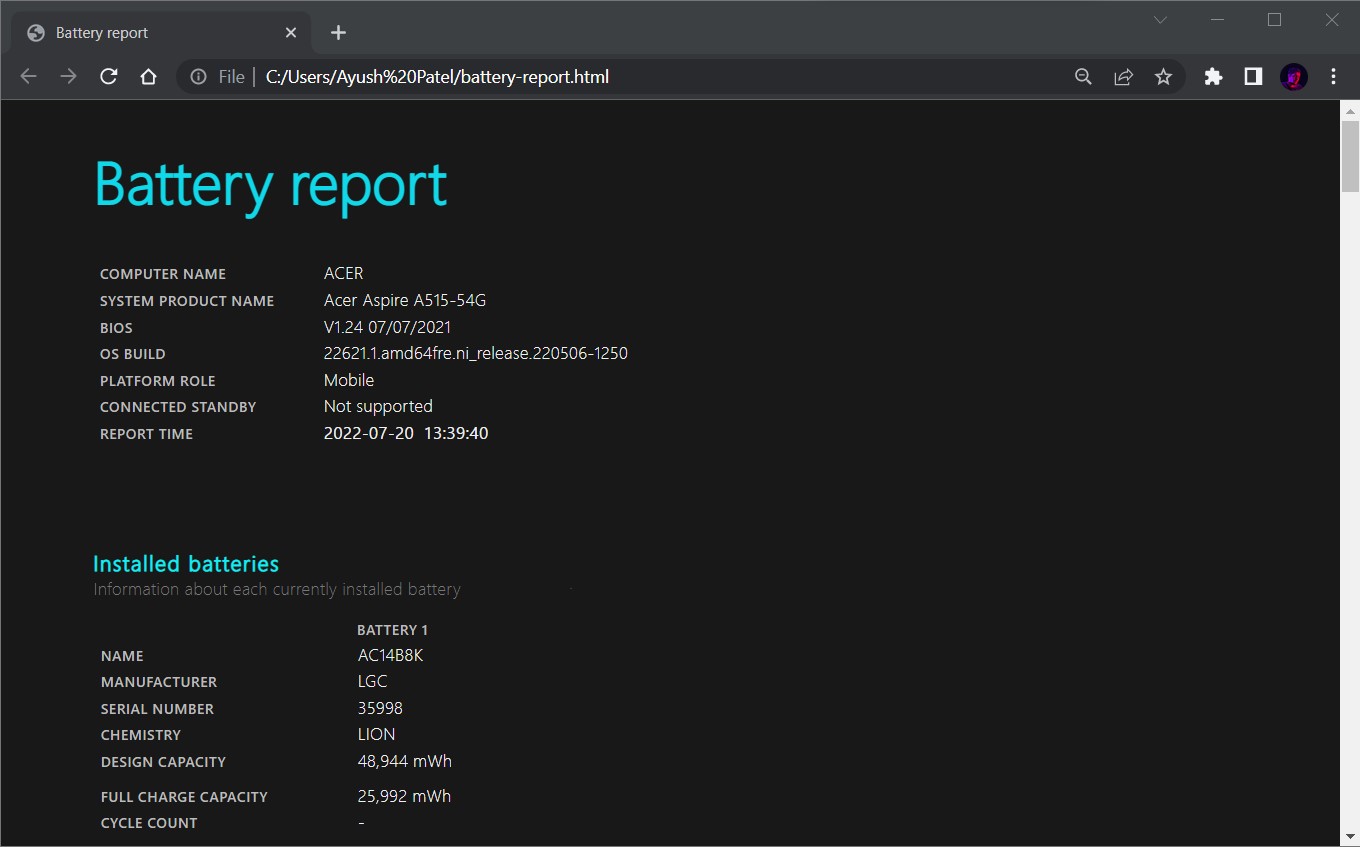
If you have the battery report file open in your web browser, you’ll notice that it’s divided into several sections with different information about your laptop’s battery. Here’s what it all means:
Once you have run a battery health report, it’s fairly easy to determine if your laptop needs a new battery. Note that the “design capacity” and “full charge capacity” are both listed under the installed battery section of the battery health report.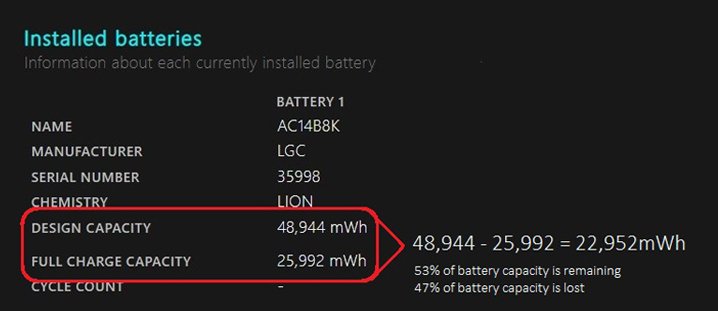
If the difference between the two capacities isn’t very large, you shouldn’t worry about replacing the battery. However, if the total charge capacity drops significantly below the 50% mark, you’re out of luck and should replace your laptop’s battery sooner rather than later.
Now that you know how to generate and read a battery health report in Windows 11 let’s take a look at some helpful tips you can use to improve and maintain your laptop’s battery life in Windows 11.
Windows 11 and all Windows versions before it give you the option to choose between three power modes, including:
Choosing a power-saving plan according to your current workload can help conserve your laptop’s battery life. To change the power plan in Windows 11, go to Settings > System > Power & Battery, and select a power plan from the drop-down menu under Power Mode.
If you frequently leave your computer unattended, consider reducing the amount of time it hibernates, and the screen is off. This will help reduce the overall drain on your laptop’s battery.
To set the time for Sleep and screen off, open the settings > Power & Battery > Screen & sleep and select your preferred times from each drop-down menu.
Dynamic Refresh Rate (DRR) only applies to gaming laptops with high refresh rate screens. It allows your computer to dynamically adjust the refresh rate between 60 and 144 Hz depending on what is being displayed on the screen instead of continuously transmitting images at 144 Hz.
Even though this results in a degradation of image quality and overall responsiveness of a screen, it is very helpful in conserving your laptop’s battery life. To enable this, go to Settings > System > Advanced Display and select Dynamic under the refresh rate drop-down menu.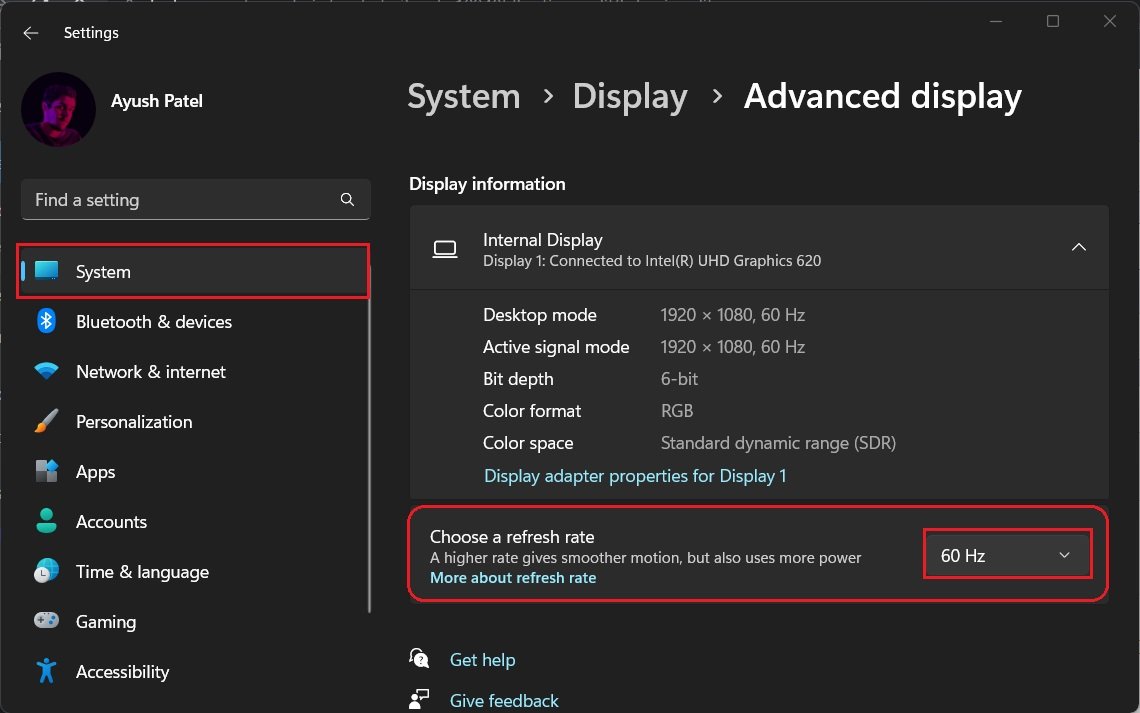
Your screen consumes less energy than usual whenever you activate the dark mode. So, it would be helpful if you use the dark mode and dark theme to improve the battery life of your Windows 11.
You can enable dark mode on Windows by going to Settings > Personalization > Colors and then selecting Dark under Mode.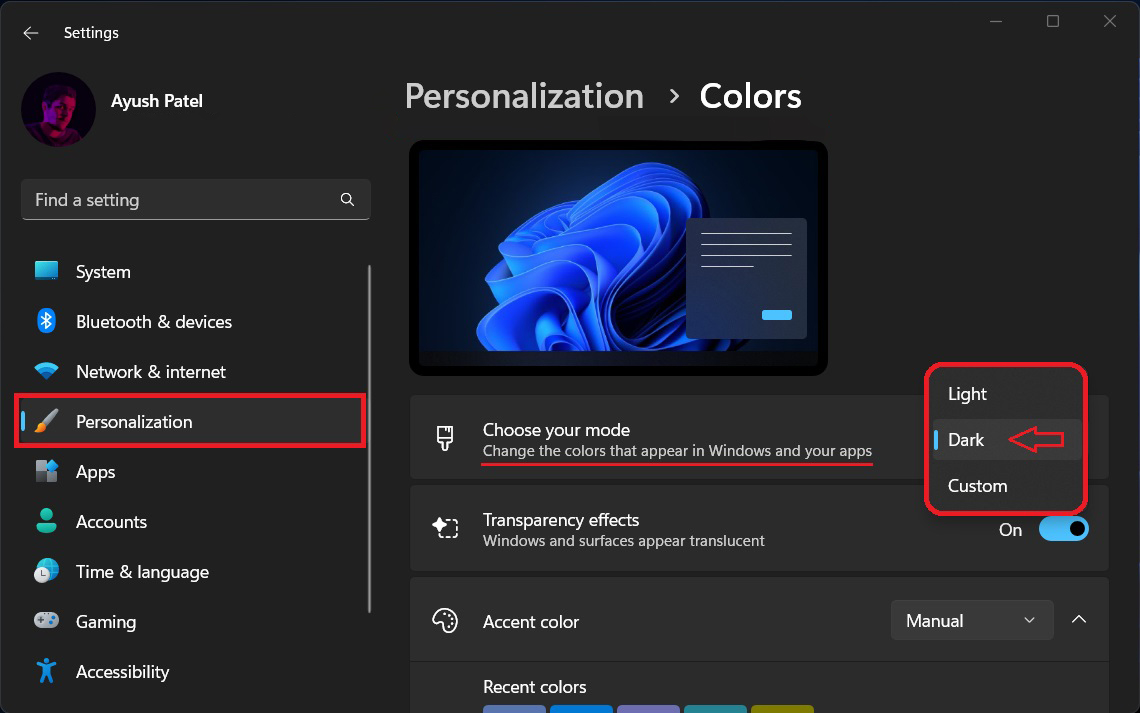
Your screen consumes less energy than usual whenever you activate the dark mode. So, it would be helpful if you use the dark mode and dark theme to improve the battery life of your Windows 11.
On average, a typical laptop battery lasts about 1,000 charge cycles or 2-4 years under normal usage conditions.
If you’re ok with using your laptop while it’s plugged in, then there’s no need to replace your laptop’s battery.
Although, your laptop is smart enough to not “overcharge” and harm itself due to excessive charging. It would help if you tried to keep the battery level at or under the 80 per cent mark.
It’s okay to charge a laptop while you’re using it. However, it’s still recommended that you charge it while it’s off, as it helps charge the laptop faster.
No, Windows 11 doesn’t have any battery issues. It comes with a Fast startup feature that you can enable to reduce the system boot time.
However, on the downside, this feature consumes much more battery to offer fast boot times. You can try disabling this feature to improve your laptop battery’s performance.
One of the most common symptoms of a bad battery is if your laptop is plugged in and it still drains quickly. A faulty power adapter can cause this, but it’s usually due to a bad battery.
A laptop battery not charging correctly can cause your laptop to run slower than usual. It will also cause the computer to shut off sooner than expected. A laptop with a bad battery will also have a shorter life span than it should.
You can determine if your laptop needs a battery replacement by subtracting the “full charge capacity” from “design capacity”.
If the difference isn’t much, then you are fine. However, if the total charge capacity drops below the 50% mark, you should consider replacing your laptop’s battery.
Sign up for a specially curated Tech Newsletter.
By submitting your email, you agree to the Terms of Use and Privacy Policy.
Your email address will not be published.
Sign up for a specially curated Tech Newsletter.
By submitting your email, you agree to the Terms of Use and Privacy Policy.